

Early Watermelons in Estonia: Best Varieties, Hybrids, and Agrotechnology
Do you dream of a sweet, juicy watermelon from your own garden, but fear the cold summer? In our detailed review, we prove: growing watermelons in Estonia is absolutely real! We analyzed the best early varieties from the Seemned24.ee catalog, from the ultra-early Japanese hybrid Asahi Miyako F1 and the legendary Sugar Baby to the exotic yellow Janosik.
Find out why Charleston Gray is better left for the greenhouse, when to plant seedlings, and why watermelons need "black plastic mulch." This is a complete guide to seed selection and agrotechnology for northern latitudes.
Introduction: Watermelons in the North are Possible
Historically, watermelons were considered a tropical crop requiring a sum of active temperatures exceeding 3000°C. However, the breeding of ultra-early hybrids and the development of technology allow for successful watermelon cultivation even in Estonia and the Baltic states.
We analyze the varieties: Asahi Miyako F1, Sugar Baby, Janosik, Crimson Sweet, Charleston Gray, Orangeglo, based on climate data and trials in Northern Europe, Canada, and the USA.
Estonian Climate: What Limits Watermelons?
Soil Temperature
Watermelon roots only begin to function fully when the soil temperature reaches 15–16°C. Below 12°C, the plant goes into stagnation. In Estonia, the soil warms up to the necessary 18–20°C only in mid-June. Therefore, direct sowing of seeds into the ground is not an option.
Long Day
Summer in the Baltics provides 18–19 hours of daylight, which boosts photosynthesis. But nights below 10°C can cause stress and reduce productivity.
Humidity and Disease
In August and September, the risk of anthracnose and fusarium wilt increases. Therefore, variety resistance is crucial.
Variety Analysis: Best Early Watermelons for Estonia
Answering key questions:
- Early watermelon hybrids? – These are F1 hybrids with a short cycle and high disease resistance.
- Which watermelon is the earliest? – Asahi Miyako F1.
- Best early varieties? – Asahi Miyako F1, Sugar Baby, Janosik.
Asahi Miyako F1 - The Standard for Earliness
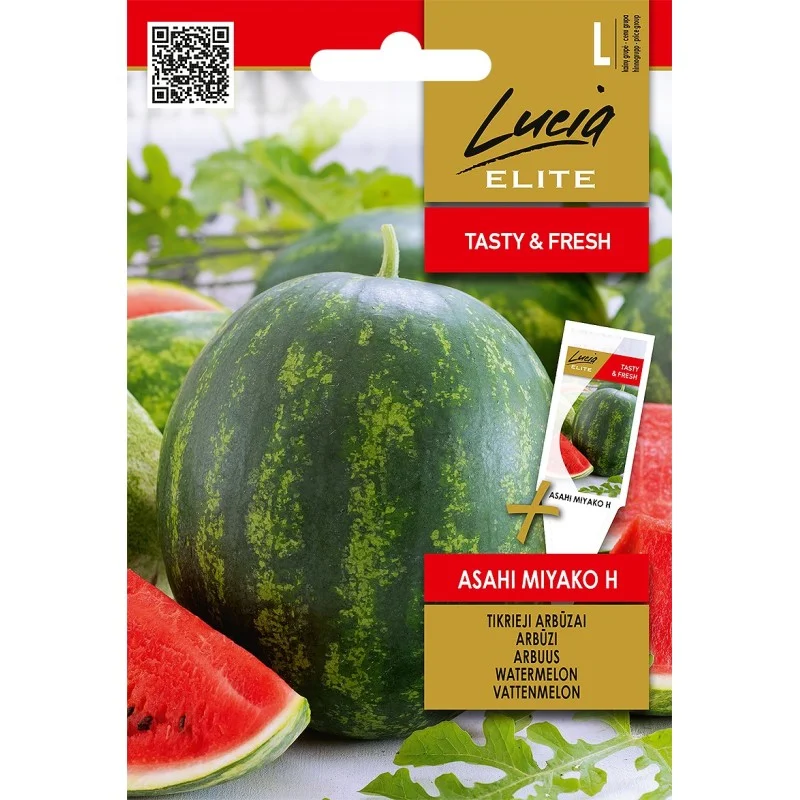
Japanese F1 hybrid.
Fruits: 4–6 kg, light green rind, pinkish-red flesh (Brix 11–13%).
Maturity: 75–85 days.
Advantages: high cold tolerance, resistant to anthracnose and fusarium.
Sugar Baby - The Classic Icebox Watermelon
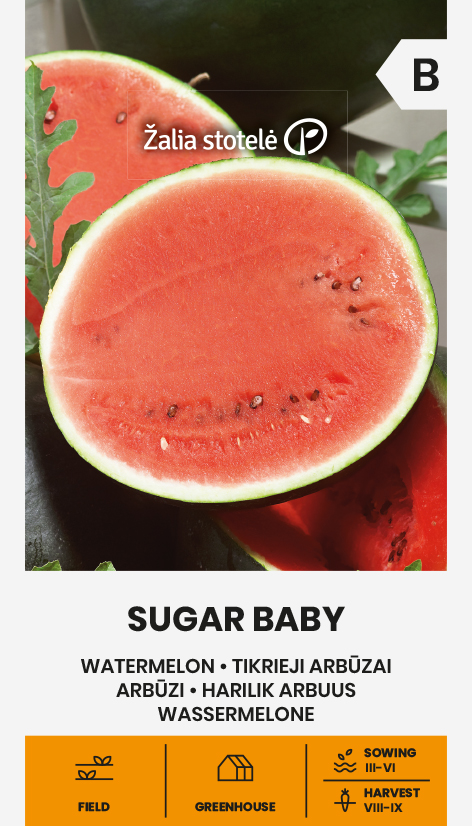
Variety from 1956.
Fruits: round, 3–5 kg, dark green rind.
Maturity: 80–90 days.
Pros: compact bush, suitable for row covers, hard rind prevents cracking.
Janosik - Polish Phenomenon with Yellow Flesh
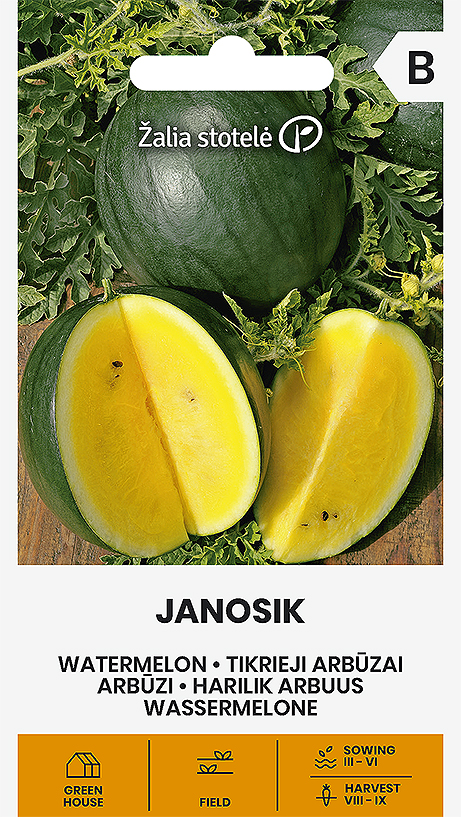
Polish selection, adapted to cold climates.
Fruits: 3.5–5.5 kg, dark green rind, honey-yellow flesh.
Maturity: 85–95 days.
Advantages: high cold tolerance, stable yield, unusual color.
Megacrimson H and Crimson Sweet - Mid-season, Risky
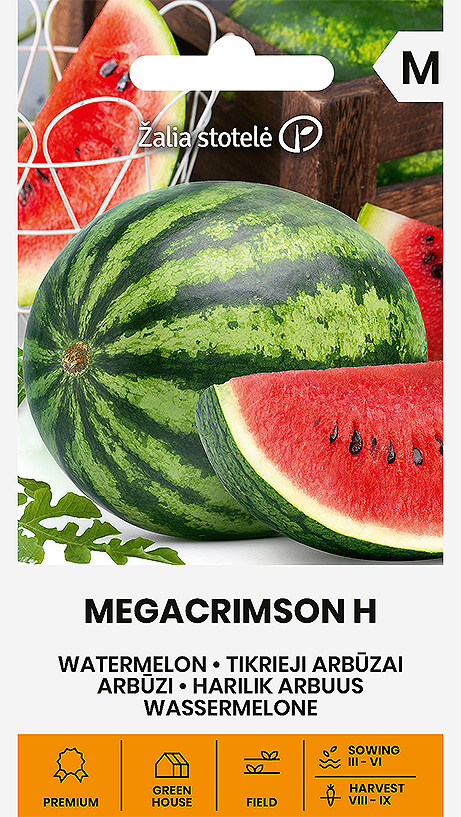
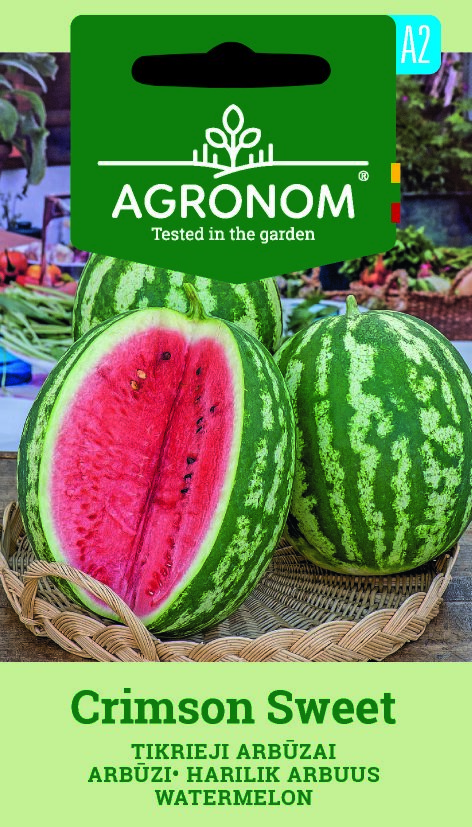
These varieties produce large and tasty fruits, but mature in 95–105+ days – which is a risk for Estonia. Suitable only for greenhouses, otherwise they won't gain enough sweetness.
Charleston Gray - The Southern Giant
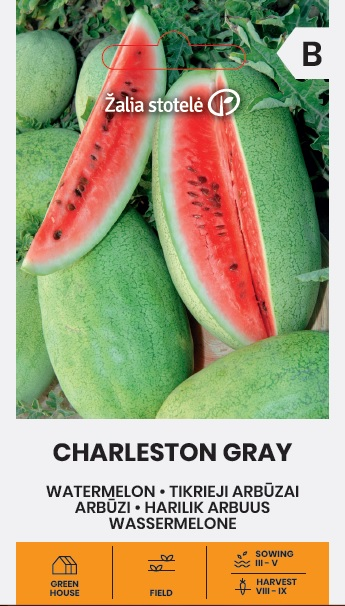
Variety from 1954.
Fruits: 10–15 kg.
Maturity: 110+ days.
Requires a heated greenhouse exclusively.
Orangeglo - Gourmet Delicacy
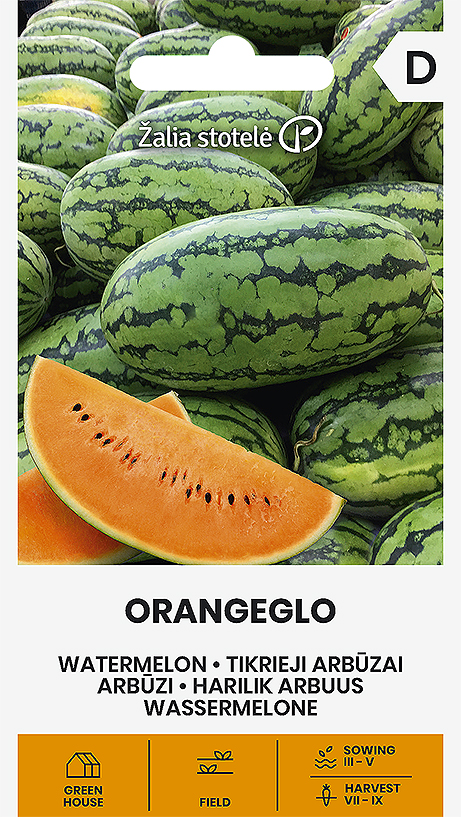
Rare variety with orange flesh and tropical flavor. Matures in 110+ days, has a brittle rind. Suitable exclusively for greenhouses.
Agrotechnology: Protocol for Success
1. Seedlings by the "30-Day Rule"
- Sow April 20–25.
- Pots 0.5–0.8 L, without pricking out.
- Germination at 25–30°C.
- After sprouting: 18–20°C day, 15–16°C night.
2. Grafting onto Lagenaria
Increases cold tolerance, resistance to fusarium, and accelerates growth.
3. Soil Preparation
- Planting out June 5–10.
- Black plastic mulch - suppresses weeds, accelerates soil warming.
- Cover with spunbond (agrofibre) for the first 2–3 weeks.
4. Pruning and Training
Leave 2–3 fruits per plant. Pinch the vines.
Plant Protection and Harvest
Diseases
- Crop rotation
- Mulching
- Resistant varieties
- Copper preparations or biofungicides
Signs of Ripeness
- Dried tendril
- Yellow ground spot
- Hollow sound when tapped
Conclusion
If you want a guaranteed result, choose: Asahi Miyako F1 – for a stable harvest. Sugar Baby – for compact beds. Janosik – for lovers of exotic types.
Early hybrids are the key to success in Estonia. With the right agrotechnology, the harvest is real!

Kirjuta kommentaar